Jessica Mascione
27 July 2021
Business News
Given Western Australia’s international renown as a resources-rich province, it’s perhaps somewhat anomalous that, until recently, the state had just one active manganese mine.
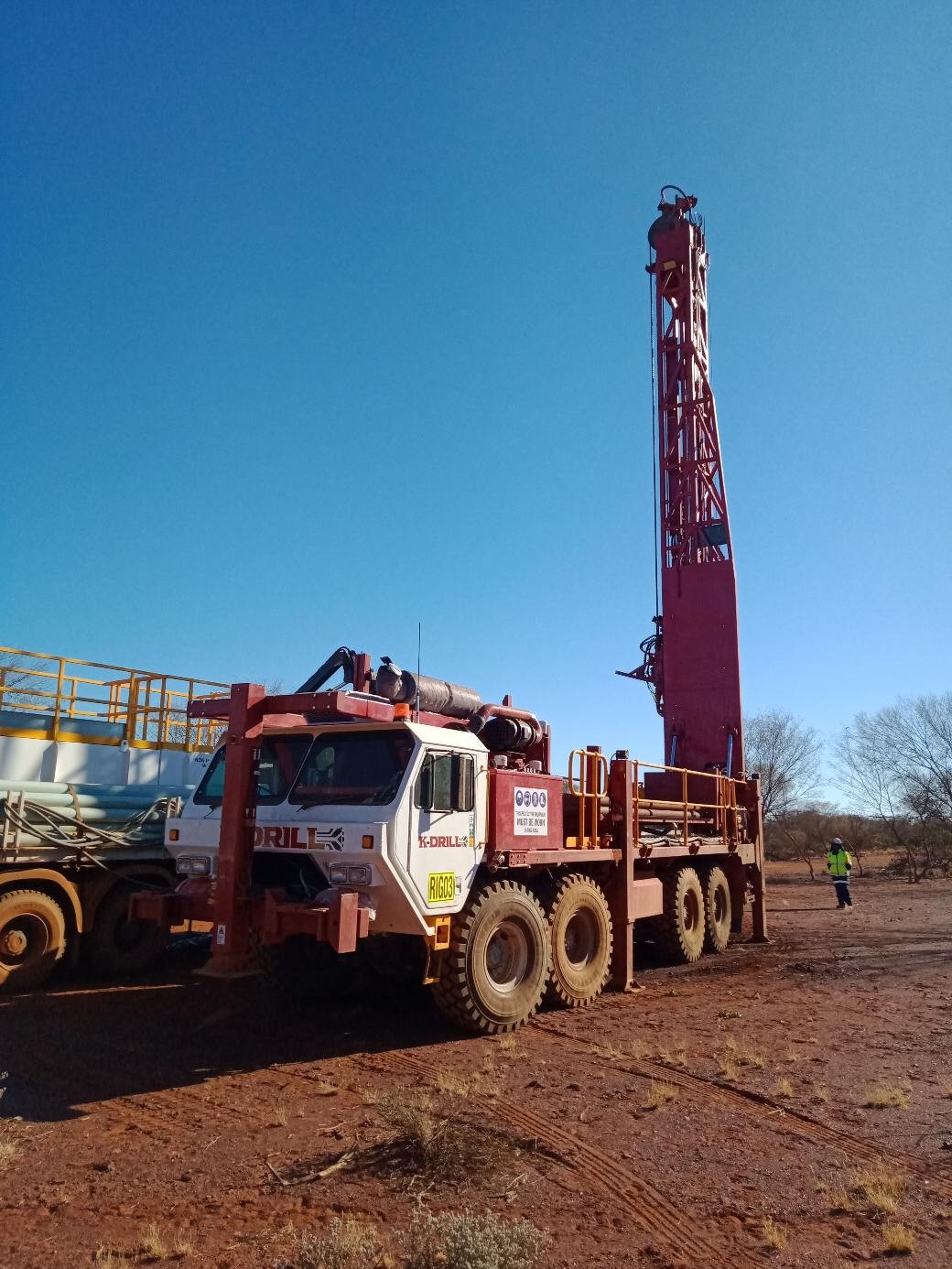
The second operation came online in April, when listed business Element 25 processed first ore from its wholly owned manganese project in the Pilbara, Butcherbird, less than a year after finishing a pre-feasibility study for the proposed 40-year operation.
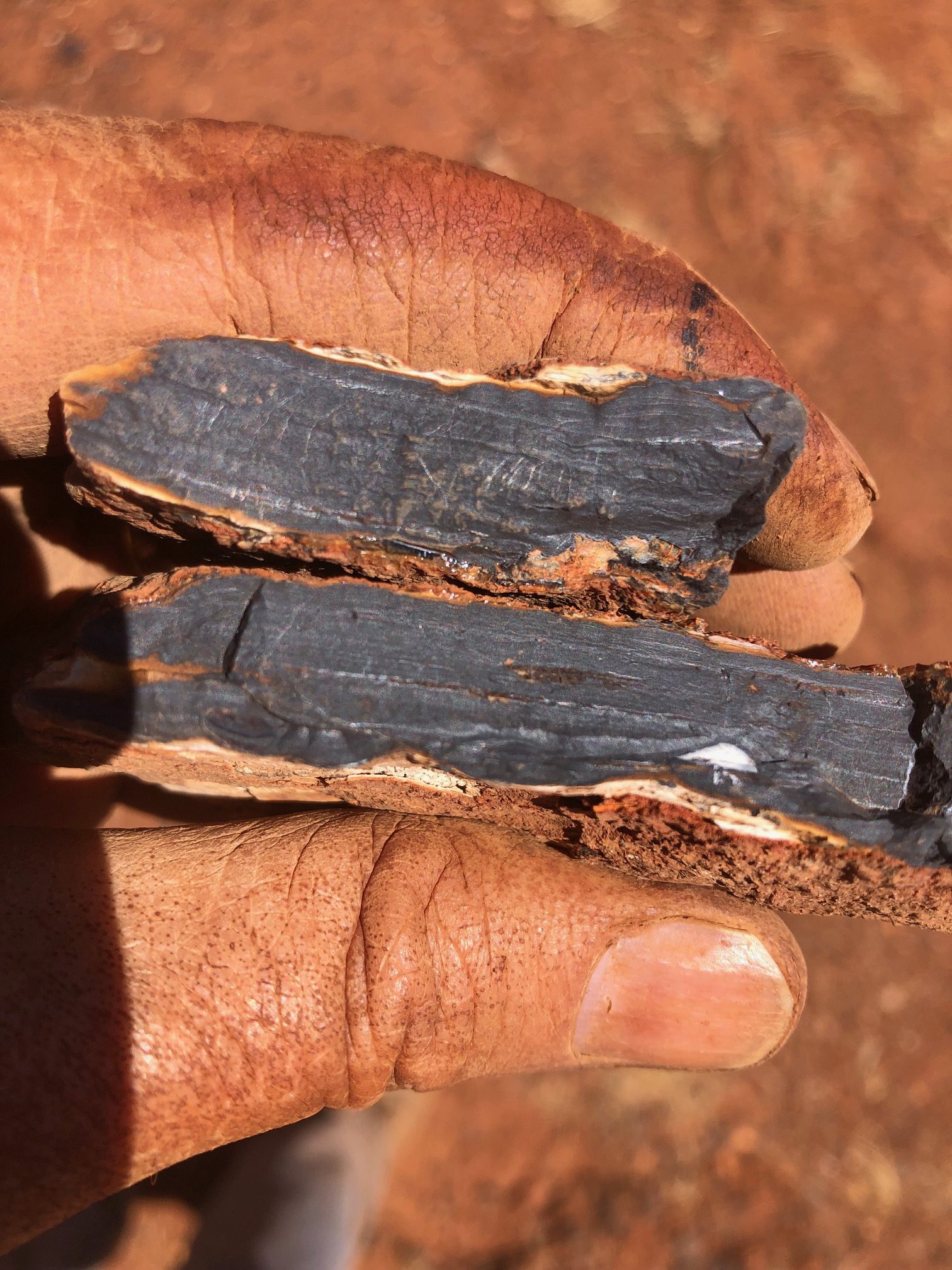
Not that production of manganese – the steel-strengthening element also used to make batteries, clear glass and ceramics – is new for WA. Manganese has been a part of the state’s minerals landscape since the 1950s, when West Perth-based Consolidated Minerals Australia brought its Woodie Woodie operation online.
The mine is now owned by Ningxia Tianyuan Manganese Industry Co (TMI), which gained the asset through its acquisition of Consolidated Minerals in 2007.
TMI returned Woodie Woodie to full operations in 2017, having placed the mine on care and maintenance for a year.
Today, Woodie Woodie and Butcherbird are two of four large-scale manganese operations in Australia. The others are Groote Eyelandt and Bootu Creek, both located in the Northern Territory.
South32 has a 60 per cent stake in the Groote Eyelandt operation, while Bootu Creek is run by ASX-listed Singaporean company OM Holdings. Their combined output accounts for most of Australia’s manganese production.
Although ranked the world’s second largest manganese producer, Australia is a fair distance behind South Africa, where Graham Kerr-led South32 also has a significant presence.
However, Australia’s production of manganese ore has been rising steadily in recent years. Combined output from the WA and NT mines was almost 6.9 million tonnes in 2019-20, up from 6.6mt in 2017-18 and 5.6mt in 2016-17.
That figure is expected to grow further with Element 25’s Butcherbird mine, while at least three WA-based companies are planning to develop manganese projects.
Butcherbird, located near Newman, is expected to produce a nominal 365,000t of ore each year, ahead of proposed expansions.
The base case operation has a pre-tax net present value (NPV) of $583 million and is expected to generate annual operating cash flow of about $40 million.
The mine cost less than $25 million to build.
Since releasing a pre-feasibility study for the project around mid-May last year, Element 25’s share price has risen more than 400 per cent, from about 39 cents to $2.20 (July 7).
The company recently completed its first delivery to Utah Point at Port Hedland, as part of a non-binding term sheet signed with OM Materials, a subsidiary of OM Holdings. OM has agreed to purchase all manganese ore produced from Butcherbird for the next five years.
In addition to Bootu Creek, OM Holdings has a small stake in the Tshipi Borwa mine in South Africa, operated by listed company Jupiter Mines.
OM is a major manganese and silicon metals company, with smelters in Malaysia and China.
It processed first ore at Bootu Creek at the end of 2005 and completed its first shipment in 2006.
It is understood the mine, located 110 kilometres north of Tennant Creek, is approaching the end of its operational life, with work recently beginning on a tailings retreatment plant.
OM expects this will process waste material (tailings) into an additional 250,000tpa throughout an eight-year period.
Suitably, the company has upped its stake in a manganese project in the Bryah Basin, located 150km north of Meekatharra, in the Pilbara, as part of a joint venture with aspiring producer Bryah Resources.
The area hosts several historical manganese mines, with the largest being the Horseshoe South operation.
Last mined in 2011 by a subsidiary of Chris Ellison-led Mineral Resources, Horseshoe South produced about 900,000t of ore in total, with high grades of well over 40 per cent manganese.
Bryah now owns the Horseshoe South mining lease, along with two nearby exploration licences.
In April 2019, the company caught the attention of OM Holdings, with which it signed a farm-in deal for Bryah Basin.
OM has since funded more than $2 million in exploration, with $500,000 recently committed to bring its stake in the project to 51 per cent.
Bryah Resources managing director Neil Marston said OM Holdings planned to continue supplying ore to its smelters in Malaysia and China.
“They’re a very good partner for us to be able to advance our manganese strategy with,” Mr Marston told Business News.
“They’ve got the skillset to take our exploration success through to production and there’s certainty to keep things moving towards production as quickly as possible from their side.”
Mr Marston said most of the funding from OM Holdings had gone towards drilling and preliminary test work, and geophysical surveys.
The recent $500,000 commitment would be used to fund further drilling, with Bryah expecting to report a mineral resource estimate for the project in the third quarter of this calendar year.
Neil Marston is optimistic about manganese.
“We’re just trying to build that resource as quickly as possible, which will allow us to advance to a feasibility study with OM’s assistance,” Mr Marston said.
West Perth-based Bryah is also exploring for copper and gold in the area, which is home to Sandfire Resources’ DeGrussa operation. The copper mine sits close to Bryah’s project.
Mr Marston recently told Business News juniors were having no trouble securing funds for exploration, given the growing demand for copper and other base metals used in both clean energy and everyday appliances.
Manganese is part of that equation.
Earlier this year, explorers Firebird Metals and Black Canyon raised a combined $10.5 million through heavily oversubscribed initial public offerings to fund exploration costs associated with manganese projects in WA.
Firebird, a spinout of ASX-listed Firefly Resources, recently added a fourth asset, Raggard Hills, to its manganese portfolio, close to TMI’s Woodie Woodie operation.
Firebird’s share price rose 200 per cent on its ASX debut in March, from 20 cents to 60.5 cents. Its market capitalisation has grown to about $34 million.
Black Canyon has also made a positive start to its first year of trading.
The company is focused on exploring for manganese, copper, and cobalt in the Pilbara, with assets including a joint venture with Carawine Resources.
Since listing, Black Canyon’s share price has increased to 28 cents, implying a market cap of about $10.5 million.
Like Bryah, Black Canyon is optimistic about the future for manganese.
Mr Marston said recent forecasts showed demand for manganese ore was expected to grow at a rate of about 2.3 per cent per annum through to 2024.
“That’s a reasonable rate of growth in the marketplace,” he said.
“While manganese is predominantly used in steel production, there are increasing views that [it] is going to be used more in energy storage for electric vehicles, because it’s cheaper than a lot of the other commodities like cobalt and nickel.
“It also has very good properties.”
Mr Marston said battery manufacturers were being urged to use more manganese in their batteries.
“That’s adding a bit of excitement to the market around manganese and it’s providing a positive outlook for some of those secondary manganese products,” he said.
However, Mr Marston noted a current oversupply of manganese ore in China – which produces most of the world’s manganese products – has placed a temporary cap on the commodity’s price.
The supply glut followed a drop in China’s demand for manganese ore last year, reflecting the impact of COVID-19.
Mr Marston said there was now roughly 6mt of ore stockpiled at Chinese ports, representing about two months’ supply.
“Normally, there’s about half of that amount of manganese ore stockpiled,” he said.
“Once that stockpile gets eaten away – and hopefully that won’t take too long to occur over the next few months – the manganese price should increase accordingly.”
Mr Marston said the Bryah Basin resources were generally of higher grade and sat at surface or near surface, meaning less processing would be required.
The biggest expense for the company, he said, would be the transport cost, noting the 700km journey from the Bryah Basin to Geraldton Port.
“It’s important that we process a higher-grade product so that our operating costs are as low as possible and balance out with our transport costs,” Mr Marston said.
He said manganese was a good fit for Bryah Resources, particularly given its exploration costs were covered.
“It gets us to a point where we can become a producer and generate revenue sooner than perhaps we would if we were just doing our copper-gold exploration,” Mr Marston said.
“We’re still very active exploring on our other projects [for] copper and gold.
“It’s nice to be able to direct our funds towards that whilst we’ve got OM Holdings providing us with funds to do manganese exploration.
“It’s the best of both worlds for us at the moment.”
Licensed by Copyright Agency. You must not copy this work without permission.
https://www.businessnews.com.au/article/Manganese-move-of-elemental-interest